
Road of Kings - Endless Glory
HeroNow GamesStrategy
4.23.26K Reviews
- Version
- 3.8.9
- Installs
- 1.00M
- Age Rating
- Mature 17+
Screenshots

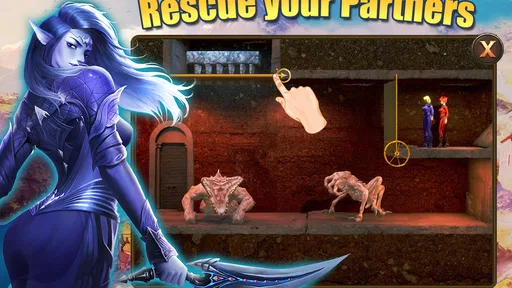
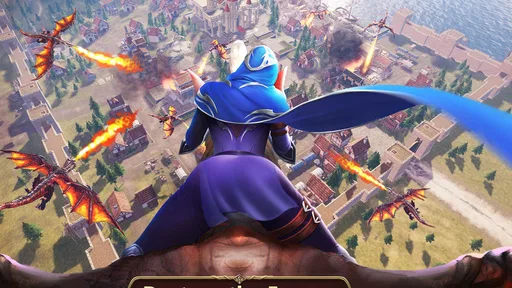

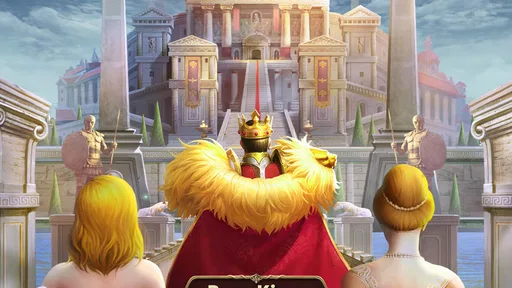
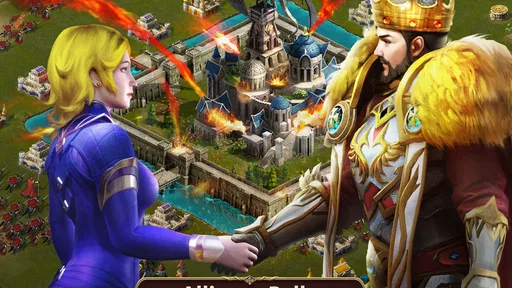
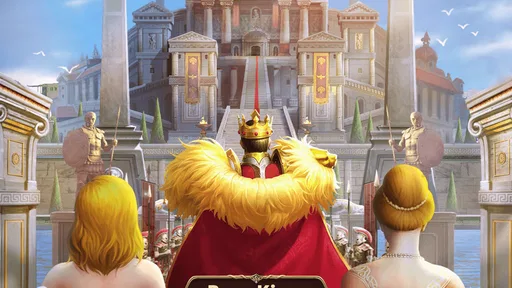
Our Review of Road of Kings - Endless Glory
 Analysis by Appyee
Road of Kings - Endless Glory is the kind of strategy game I would describe as a dramatic, adult-themed kingdom simulator with a strong focus on choices, territory, relationships, and gradual progression. I spent time looking at how its menus, text, pacing, and interaction style affect different kinds of players, rather than judging it only by its promise of becoming a king. My overall impression is that it can be entertaining when I want a long-running mobile game with several systems competing for my attention, but it is not equally comfortable for every player or every situation.
Developed by HeroNow Games, it is available as a free game in the strategy category, with optional purchases ranging from $0.99 to $99.99 per item. The mature rating matters here: the tone and themes are aimed at adults, so I would not recommend treating it as a family-friendly kingdom game. It has reached over one million installs and holds a 4.2 average from around seventy thousand ratings, which suggests that the basic formula has found a substantial audience. Still, popularity does not remove the need to understand its pace, presentation, and possible friction before committing time to it.
How the kingdom experience reads and navigates
My first concern with a strategy game like this is not whether the map looks impressive, but whether I can understand what the game wants me to do next. Road of Kings - Endless Glory presents a broad fantasy of ruling, expanding, and managing personal relationships. That creates several possible directions at once. A new player may be asked to follow objectives, inspect resources, improve a settlement, interact with characters, and make decisions that appear to belong to different parts of the same story.
I found that this structure can be appealing once I accept that the game is built around returning to several activity types instead of completing one clean campaign mission after another. The experience feels more like maintaining a growing court than moving through a tightly controlled strategy tutorial. For me, the best way to approach it is to treat each session as a short check-in: review the current objective, collect what is ready, decide which upgrade deserves attention, and only then explore optional interactions.
That order is more useful than tapping every highlighted element immediately. In a busy interface, visual prompts can make every button feel equally urgent even when some actions are simply distractions from the next meaningful improvement. I recommend pausing after each major reward and reading the surrounding labels before spending anything. This small habit makes the game less confusing and helps prevent accidental choices made purely because a button is bright or placed prominently.
Text-heavy strategy games live or die by presentation. Here, readability is closely tied to how much information is shown at once and how comfortable I am with the game’s mature fantasy style. Players who prefer large, quiet interfaces may find the number of panels and choices tiring over a long session. I would be especially cautious if you rely on very small text, have difficulty distinguishing close colors, or find dense screens mentally exhausting. The game may remain playable, but the effort required to interpret it can become part of the challenge.
Navigation also affects enjoyment because the game asks me to move between ruling duties and relationship-focused content. Those two sides do not necessarily satisfy the same kind of player. Someone who wants pure tactical planning may feel pulled away from resource decisions, while someone interested in characters may find expansion tasks repetitive. I think the game works best for people who enjoy switching between several connected goals rather than demanding that every screen support one narrowly defined purpose.
Learning the rhythm instead of chasing every prompt
One of the more useful discoveries in my play sessions was that progress feels easier when I separate “available” from “important.” A reward can be ready to claim without being the best reason to change my plan. I try to identify the action that improves my next few decisions, such as strengthening the part of the kingdom currently limiting progress, before spending resources on something merely attractive.
This approach also helps players who need more time to read. Rather than racing through every notification, I can handle one category at a time and return later. That makes the game more manageable for a player who becomes overloaded by simultaneous prompts. It is not a replacement for a simpler interface, but it is a practical way to reduce visual and cognitive clutter during ordinary play.
I would not call the navigation effortless. The combination of kingdom management, character interactions, and expansion gives the game its identity, but it also makes the learning curve feel less direct than in a compact tactics title. If you want a strategy game that explains one rule, lets you master it, and then introduces the next, a more focused alternative may suit you better. Road of Kings is more comfortable for players who enjoy learning through repeated visits and gradual familiarity.
Playing with different abilities and in different situations
I find that the game’s tap-driven format changes how I approach its many choices: there is little pressure to react instantly, so I can pause, read, and decide before committing. That slower rhythm can suit players who need time between actions, though small targets may still be awkward on a crowded screen. Next, I’d look at how that flexibility holds up across different play situations.
Motor demands and touch comfort
From a motor perspective, this is primarily a tap-driven experience rather than a game built around rapid physical control. That is a positive distinction for me. The core appeal comes from selecting actions, reading outcomes, and deciding where to direct attention, not from steering through a fast platforming section or holding several controls at once. Players who find continuous movement difficult may prefer this slower strategic format.
However, fewer action controls do not mean no motor barriers. A screen with several small targets can still be demanding for anyone with limited precision, hand tremors, or fatigue. The risk is not only missing a button; it is also confirming an action before fully understanding it. I suggest playing with the device supported on a table or in both hands, especially during longer sessions. That simple change can make repeated tapping more stable than holding the phone in one hand.
Another practical point is pacing. I do not feel that Road of Kings needs to be played in one uninterrupted block to make sense. I can stop after a decision, return later, and continue with a clearer head. That makes it more suitable than action-heavy strategy games for players who need frequent breaks. On the other hand, anyone who prefers a single, self-contained session may dislike the feeling of maintaining a developing kingdom over time.
Visual and sensory load
The game’s adult fantasy presentation is part of its appeal, but it can also create sensory and emotional concerns. The mature rating is not a minor label to ignore. I would keep the game away from children and avoid opening it in shared spaces where its themes or images could make others uncomfortable. It is also not the right pick for someone looking for a gentle, neutral, or all-ages fantasy atmosphere.
For players sensitive to visual density, the main issue is likely to be the amount of information competing for attention. Strategy interfaces commonly use icons, panels, character art, and status elements together, and this game’s broad design makes that especially relevant. I found it easier to focus when I chose one task before exploring the rest of the screen. Reducing distractions outside the game also helps: I would play with unnecessary notifications silenced and the screen brightness set to a comfortable level.
Audio is not the reason I would choose this title, and I would not make sound essential to understanding the experience. Playing quietly is therefore practical for a commute, a waiting room, or a shared home. Still, silent play can make some feedback less noticeable, so I recommend checking the screen after an action rather than assuming that a missed sound means nothing happened. That habit is useful for anyone who cannot comfortably rely on audio cues.
Short sessions, interruptions, and everyday use
A realistic use case is a player checking the kingdom during a lunch break. I can open the game, review what has progressed, make one or two deliberate choices, and leave before the session becomes mentally heavy. This works better than trying to absorb every available system while distracted. If I am waiting for an appointment, I would focus on simple maintenance and save complicated decisions for home, where I can read at my own pace.
Players with attention difficulties may appreciate having several kinds of activity to choose from, since a single repetitive task does not define the whole experience. The opposite is also true: the number of possible directions can make it harder to decide what matters. My advice is to set a personal session goal, such as improving one area or completing one line of progress, instead of trying to optimize the entire kingdom at once.
The game is less suitable for environments where privacy is limited. Its mature themes can be awkward on public transport or around children, even if the player is only checking a routine task. That is a situational access issue rather than a technical one, but it affects whether the game fits into daily life. I would choose it for private downtime, not as a universally appropriate waiting-room game.
Where the remaining barriers appear
The largest barrier is the relationship between complexity and clarity. A player with strong strategy experience may enjoy having multiple priorities, while a newcomer can interpret the same structure as uncertainty. The game’s promise of ruling, expanding, and managing relationships gives it personality, but it also means that players must decide what kind of ruler they want to be and which systems deserve attention.
There is also a financial consideration. The game is free to start, but optional purchases can cost as much as $99.99 per item. I would set a personal spending boundary before becoming invested in the kingdom. That is particularly important in a long-term progression game, where the desire to speed up a goal can feel stronger after repeated sessions. Playing without buying anything may be perfectly reasonable for a cautious user, but anyone who dislikes in-app purchase pressure should approach carefully.
Resource decisions deserve patience. I would avoid spending premium-looking currency immediately, even if the game presents an attractive shortcut. First, I would learn which activities I actually enjoy and which upgrades affect my preferred style of play. This is one of the most important trade-offs in the game: convenience can save time, but early spending can also remove the satisfaction of learning the normal progression.
Another barrier is the mature subject matter. Players who want romance-free strategy, a historically grounded setting, or a clean competitive board-game feel should look elsewhere. Road of Kings is not simply a neutral territory puzzle. Its identity depends on a more indulgent fantasy of power and relationships, and that will either be a reason to try it or a reason to skip it.
How it compares with familiar strategy alternatives
Compared with a traditional turn-based tactics game, this title places less emphasis on carefully positioning a small squad in a single battle and more on managing a continuing royal life. That makes it a better match for me when I want progression across several areas instead of one focused battlefield. If my priority is precise combat and short, clearly bounded missions, I would choose a tactics game instead.
Compared with a simple city builder, Road of Kings adds a stronger character and adult-fantasy layer. The kingdom is not just a collection of buildings and production timers; the social and romantic side changes the tone of the experience. That makes it more distinctive, but also less suitable for players who want an uncomplicated construction sandbox.
Compared with a visual novel, it offers more management and expansion decisions. I cannot approach it only as a passive story, because the ruling side asks me to think about progress and priorities. If I want character scenes without resource planning, a story-first game would probably be more comfortable. If I enjoy both narrative flavor and long-term management, this hybrid structure is its strongest argument.
Who should try it and who should skip it
I would recommend it to adults who enjoy mobile strategy with a fantasy court, gradual development, and several competing goals. It is especially suited to players who like checking progress in short sessions, experimenting with priorities, and accepting that not every system will matter equally at every moment. The free entry point makes it easy to sample the structure before deciding whether it deserves regular attention.
I would skip it if I need a calm, family-safe game, a purely tactical challenge, or a very minimal interface. I would also hesitate to recommend it to anyone who finds dense screens, mature themes, or optional spending especially uncomfortable. A simpler builder or a focused tactics game would provide a cleaner experience in those cases.
On iOS or Android, I would make sure the device is comfortable to hold and that the operating system meets the stated minimum of Android 7.1 where Android is concerned. The current version is 3.8.9, so I would keep the installation updated when possible, particularly if I encounter interface behavior that seems unusual. I would also review purchase controls before handing the device to another person, since the game is free but includes paid items.
In the end, my view of Road of Kings - Endless Glory is positive but selective. Its strongest feature is the way it combines kingdom expansion with personal and courtly decisions, giving the strategy format a more theatrical identity than a standard builder. Its weakest point is that the same variety can make the experience visually and mentally demanding, especially for players who need simple navigation or a predictable pace.
The best way to play is deliberately, privately, and in manageable sessions. I would not rush through prompts, spend quickly, or assume that every available action deserves immediate attention. With that mindset, the game can work well as an adult strategy pastime during quiet breaks. Without it, the layered interface, mature tone, and purchase options may feel like unnecessary obstacles.
HeroNow Games has created a game with a clear personality rather than a neutral strategy template. I would recommend giving it a cautious trial if its royal fantasy and relationship systems appeal to you, while keeping expectations realistic about accessibility, complexity, and spending. For me, it is worth exploring for the right player, but it is not a universal recommendation—and recognizing that is part of making the game more enjoyable.
Verdict
Strengths of Road of Kings - Endless Glory
- Large-scale kingdom battles offer plenty of strategic depth.
- Hero upgrades and troop combinations keep progression engaging.
- Alliance features encourage cooperation and regular participation.
- The fantasy visuals are colorful and easy to follow on mobile screens.
- Multiple events provide additional goals beyond the main campaign.
Limitations of Road of Kings - Endless Glory
- Progress can feel slow without frequent play or resource spending.
- The interface may seem crowded for new players at first.
- Competitive rankings can favor users who invest heavily in upgrades.
- Some activities require waiting timers that interrupt longer sessions.
- The game may consume considerable battery during extended play.
Similar Picks in This Category
View All
Clash of Clans
Supercell4.5

Plants vs. Zombies™
ELECTRONIC ARTS3.7

Lords Mobile: Kingdom Wars
IGG.COM4.5

Clash Royale
Supercell4.4

State.io — Conquer the World
CASUAL AZUR GAMES4.1

Car Driving School : Car Games
Spark Game Studios3.9
Frequently Asked Questions
What is Road of Kings - Endless Glory?
Road of Kings - Endless Glory is a mobile strategy role-playing game that combines kingdom management, hero collection, resource gathering, and real-time or asynchronous battles. Players develop their territory, recruit and upgrade characters, complete quests, join alliances, and compete against other players. The game is designed for users who enjoy long-term progression, tactical team building, and fantasy-themed empire development rather than short, purely casual sessions.
Is Road of Kings - Endless Glory free to download and play?
The game is generally available as a free download, allowing players to begin building their kingdom without paying upfront. However, it may include optional in-app purchases for premium currency, upgrade materials, construction acceleration, hero development, or special offers. You can progress without spending money, but free players may need more patience because timers, limited resources, and competitive events can make advancement slower than it is for paying users.
Does Road of Kings - Endless Glory require an internet connection?
Yes, an active internet connection is normally required because the game relies on online services for account access, cloud progress, events, rankings, alliance features, and interaction with other players. It is not intended to be a fully offline experience. A stable Wi-Fi or mobile-data connection is recommended, especially during battles, territory activities, or updates, since interruptions could prevent progress from being saved correctly.
Is Road of Kings - Endless Glory suitable for beginners?
Beginners can learn the basics through introductory missions, guided upgrades, and early rewards, but the number of systems may feel overwhelming at first. Kingdom construction, hero formations, research, equipment, resources, alliances, and timed events all become important as you advance. New players should follow the tutorial carefully, avoid spending premium currency immediately, and join an active alliance to receive advice, assistance, and additional rewards.
What should I know about purchases and progression before downloading?
Progression is built around repeated upgrades, resource management, hero improvement, and participation in events or alliance activities. Some upgrades may take time, while premium currency can shorten waiting periods or provide access to additional resources and bundles. Before downloading, check the purchase settings on your device and set a spending limit if necessary. Players who prefer completely relaxed, offline, or one-time-purchase games may find the live-service structure less suitable.
Play our best games!


